
Begin a Martin County Property Search
A good Martin County property search starts simply. Turn the clue in hand into the identifier the next office actually needs. The Martin County PVA comes first for any address. That Property Valuation Administrator links the situs, the physical property address, to a map or account number and the assessment name. The county publishes no online parcel-card search. Phone and counter access are the practical paths here. The office sits at 42 East Main Street in Inez. The phone number is 606-298-2807.
Bring the exact parcel number and owner spelling to the Martin County Clerk next. The clerk's land records hold deeds, mortgages, liens, releases, plats, and other filed instruments. A map can help identify a tract, but Kentucky DOR says maps serve identification only, not conveyance. It is no title opinion or boundary survey.
- Ask the PVA to match the address or owner to its map or account number.
- Search that name in both grantor and grantee directions through the clerk's CCLIX or eCCLIX records.
- Check the PVA values and exemption status, then ask the sheriff or clerk for the current tax stage.
- Request a PVA or DOR map and compare it with the deed's legal description and any recorded plat.
- Order the needed instrument from the custodian, using microfilm or KDLA for older material.
Martin County Property Records Offices
Three offices hold Martin County land answers. Each owns a different record. The Martin County Clerk keeps the recorded legal trail and takes delinquent tax bills from the sheriff. The PVA maintains the assessment roll, parcel identity, and land and improvement values. The sheriff collects current taxes. Foreclosure, quiet title, probate, and lien files belong to the Martin Circuit Court Clerk. Asking the right office first saves real time.
Martin County Sheriff and Clerk
County tax offices
Inez, KY 41224
Confirm by phone
Martin County Clerk Record Trail
Martin County's clerk records page outlines a layered trail. The CCLIX indexes cover deeds and mortgages back to 1966. eCCLIX puts most instruments filed from January 2004 onward online. Microfilm holds the older material. One caution applies here. An index entry and a viewable image are two different thing. A name can show up in the older index. The actual image sits on film or at the office, waiting to be pulled.
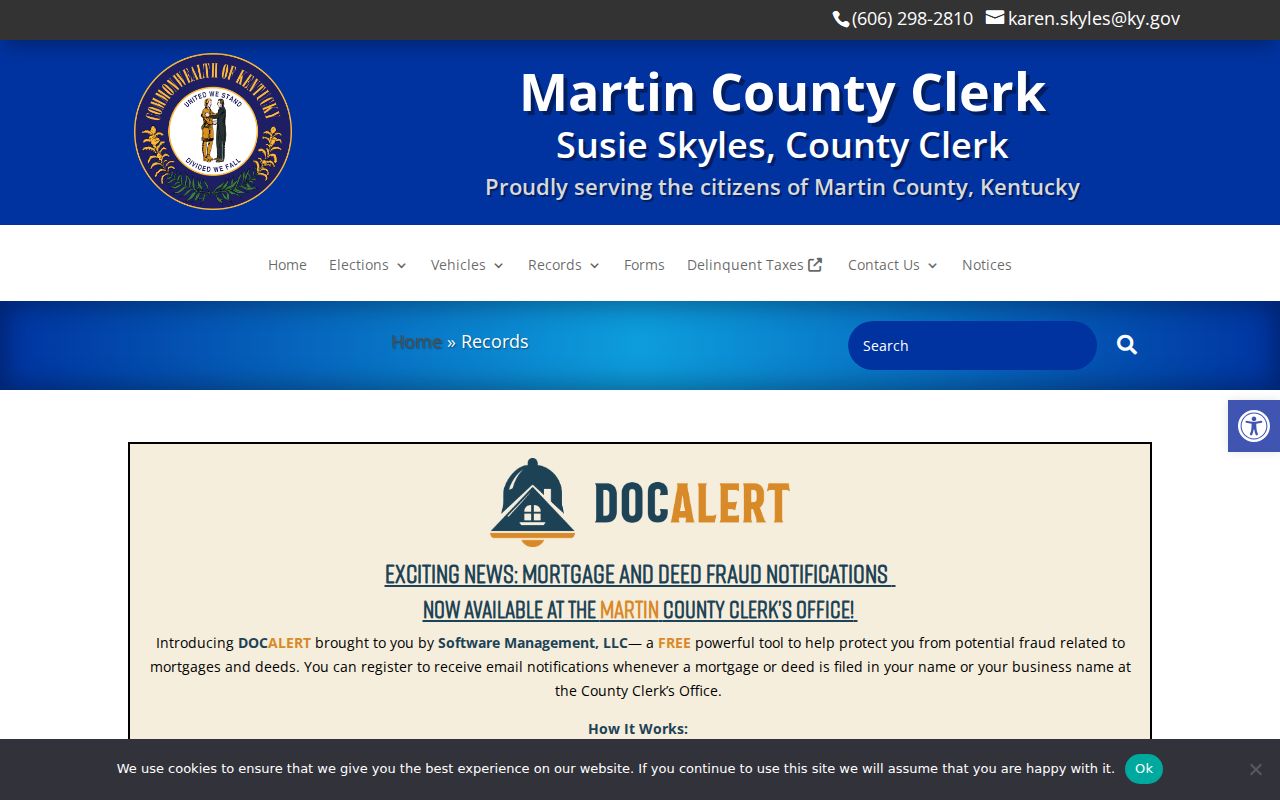
The clerk's official page marks the correct starting point. It anchors any Martin County property records trail. Getting the actual instrument still takes a recording citation. A custodian copy comes with it. eCCLIX runs on accounts. Registration, invoicing, and payment come along the way.
Anyone can search the public records and indexes inside the clerk's office. There is no search fee. Mail, fax, email, and a Kentucky Open Records Act request all work too. Before ordering a copy, jot down the instrument type. Note the recording date, the party names, and the book and page.
Note: Preserve exact name spellings and search a business, estate, or trust under its full recorded name.
Martin County Deed Image Access
One of the most useful facts in Martin County property records is the 1966 index depth. The images cut over in 2004. That gap explains why a search can return a solid reference yet no document that opens at home. The clerk can take that reference and pull the filed deed, mortgage, lien, release, will, or plat. Older chains keep running through office microfilm and deed books rather than stopping at the website.
For subscribed online access, the eCCLIX login is the door. Occasional researchers can simply contact the Legal Records Department with an exact citation. Deeper history lives at the Kentucky Department for Libraries and Archives. That archive lists Martin County deed reels from 1870 through 2017. Each route covers what the others miss.
Assessed Value in Martin County
Kentucky law sets fair cash value as the assessment standard. Values are dated to January 1. The Martin County PVA tracks land, improvement, and total figures for each parcel. New construction gets added to the tax roll every year. Physical inspections run on a cycle of no more than four years. An assessment is administrative, though. It is not a sale appraisal. It can differ from the price stated in a recorded deed.
The tax path changes by stage. The sheriff collects Martin County tax bills during the normal collection period. Delinquent bills move to the county clerk. The county attorney handles a later collection role. For current status, ask the office holding the bill that day. The official Martin County PVA page lists contacts and assessment details.
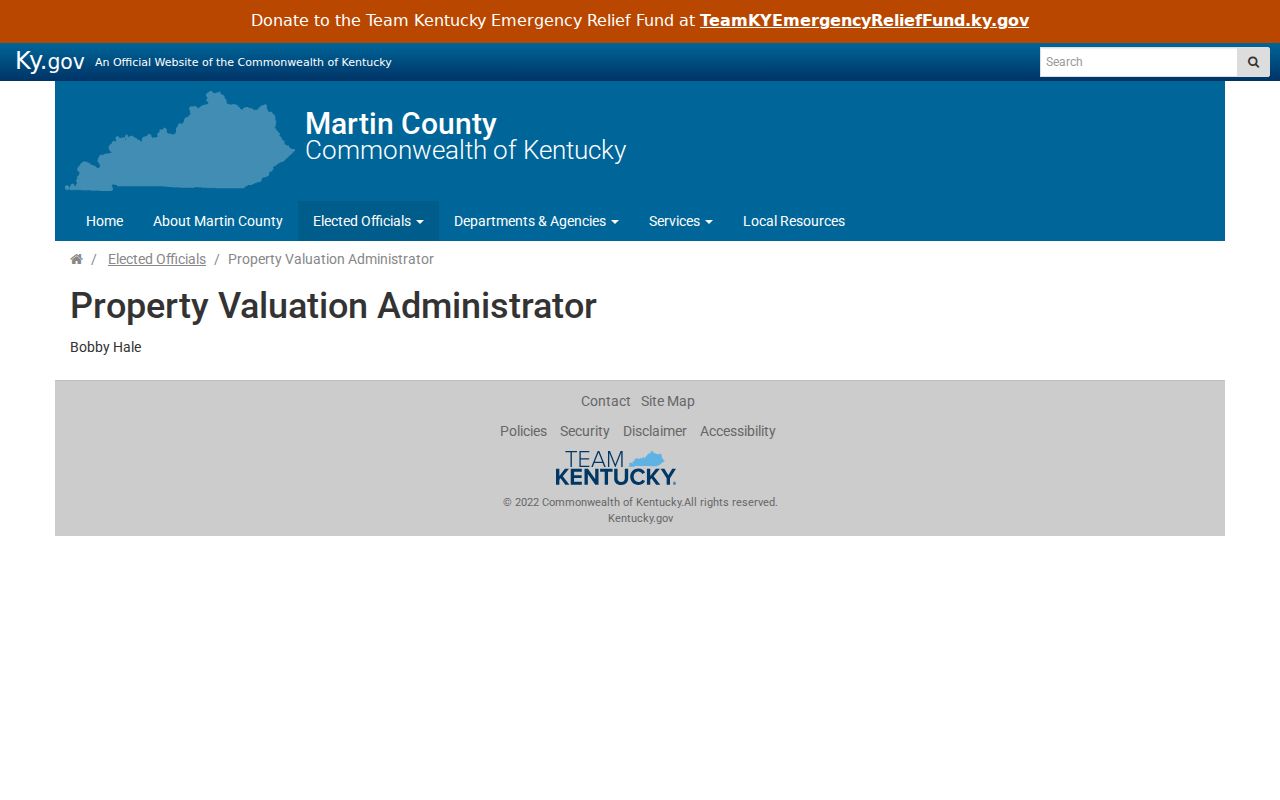
The page names the local assessment custodian clearly. It offers no public parcel-card search, so phone or counter access to the PVA remains essential for parcel details.
Martin County Property Record Types
A single parcel in Martin County can surface in several official series. Each one exists for a distinct purpose. The deed records the transfer itself. The PVA card backs the assessment. A tax account tracks collection status. A plat or survey clarifies the land description. Court files can add disputes or estate proceedings. They never replace the recorded instrument. Reading the series together tells you far more than any single property records screen.
| Record Type | What It Documents | Kept By | Access |
|---|---|---|---|
| Deeds | Transfers, parties, legal description, source of title | County Clerk | CCLIX, eCCLIX, office, microfilm |
| Mortgages and liens | Filed claims and later releases | County Clerk | Index, image service, office |
| Assessment | Parcel identity, land, improvement, total, exemption | Martin PVA | Phone or counter |
| Tax bills | Collection or delinquent status | Sheriff, then Clerk | Office and state guidance |
| Maps and plats | Identification, lots, calls, adjoining tracts | PVA, DOR, Clerk | Data request and recorded plat |
Match the record to the question you are asking. For a transfer or lien, start with Martin County deed records. For current value, an exemption, or a bill, the Martin County PVA and tax offices are the better first stop, while a map works mainly as a locator and the recorded deed and plat carry the legal text of the property records.
Martin County Parcel Map Fallback
Martin County offers an Emergency Management and E-911 mapping page. The county publishes no public parcel viewer there. No parcel layers, identify tool, or download appears. Treat any interactive map as nonexistent rather than hidden. For a map of a subject parcel and its adjoining parcel numbers, ask the PVA directly. Kentucky DOR Mapping Services also sells formal map and GIS data products.
That page describes the mapping office and its duties. It shows why a direct map or data request is often necessary. DOR supplies standard county maps and digital GIS data on request. Its warning matters: the product is for identification only, never for conveyance. Before relying on any drawn line, compare it against the deed's metes-and-bounds calls and lot and block. Check the source-of-title clause, survey, and recorded plat too. When the actual line is disputed, a licensed survey is required.
Rural Martin County Address Clues
Rural Martin County property records lean on roads, hollows, branches, creeks, and adjoining owners. There is no street grid to lean on instead. Official Inez sources list Route 40 with Tomahawk and Route 908 with Coldwater Road. These are two examples of parallel address forms. Keep both versions when you call an office. Directional prefixes, rural route text, ZIPs, owner spellings, and nearby landmarks each work as separate clues.
A mailing address and a situs are different fields. The mailing line tells the PVA where to send notice. The situs identifies the land itself. A postal label like Inez 41224 or Warfield 41267 does not prove a parcel sits inside city limits. Kentucky Secretary of State city boundary filings are the better boundary source.
Martin County Historical Land Depth
Martin County formed in 1870 from Floyd, Johnson, Lawrence, and Pike counties. That year matches the first entry in KDLA's Martin deed microfilm inventory. An older tract, though, may point elsewhere. It could trace to a predecessor county or a Kentucky land patent record. KDLA lists Martin deeds from 1870 through 2017. Surveys run from 1875 through 1937, and wills from 1861 through 2017. Selected tax-assessment books date to the late nineteenth century.
Survey reels help with an old deed. That deed may name a watercourse, ridge, branch, or adjoining owner no longer matching a postal address. Wills and probate files can explain an inherited transfer. The Kentucky Historical Society library and local library or historical society hold further leads. Confirm exact Martin County directory and newspaper holdings before visiting.
New Martin County Filing Alerts
The clerk's current records page advertises free Doc Alert registration. A person supplies a name and an email. The clerk then sends notice whenever a deed or mortgage is filed under that personal or business name. This timely tool helps an owner spot an unexpected filing sooner.
Alert limit. Doc Alert sends a notice. It does not block a filing, release a lien, insure title, or replace a fresh index search.
When an alert arrives, confirm the instrument with the clerk. Compare party names, recording date, document type, and property description before deciding whether it involves the right land or person.
Martin County Court Record Links
A deed search can point toward a court matter. But the court file is a separate record set. Foreclosure, quiet-title, partition, probate, and lien disputes may appear in Kentucky CourtNet. A search yields a county, case number, case type, party, filing date, and status. Those results are leads, not proof of title.
The Martin Circuit Court Clerk holds the local file. The office can explain access to pleadings, orders, and judgments. Older material may sit at a state facility or KDLA under retention rules. No courthouse fire is documented for Martin County. So gaps should be documented through the custodian rather than blamed on an unproven event.
Martin County Tax Delinquency Check
A tax delinquency search differs from an ownership search. Kentucky moves bills from the sheriff to the clerk after the normal collection phase. The KYDtax site identifies lists offered for scheduled sales. The Martin County result does not render there. Current balance, sale availability, and payoff must be confirmed with the clerk.
State guidance says an owner may pay until the sale date. A list can change. Save the date of every check, and never treat an older screenshot as live status. The recorded deed names the titled party. The tax file names the account and its collection stage.
Limits of Martin County Property Records
Martin County property records can identify an assessment owner, recorded grantee, filed lien, or stated consideration. They also show an assessed value, tax stage, or mapped tract. They cannot alone prove every interest has been found. A parcel line is not a survey. An assessment name is not a legal opinion. A recorded amount is not a current appraisal. A CourtNet hit is not the full case file. Safe at Home and other legal protections may also shield an address.
For a purchase, estate, boundary conflict, or suspected fraud, verify the latest record with its custodian and get the right professional help. Keep a dated worksheet noting which office answered. Note the exact name or parcel number used, and the book, page, instrument, or case number returned.
Lawful use. Use Martin County property records for lawful land research, purchase diligence, estate work, and civic review. Never use owner information to stalk, harass, or harm a person.