
Martin County Property Tax Fields
Read each Martin County tax record as linked fields. The PVA keeps the identity and value side of the file. Kentucky assessments use fair cash value. That standard means the price property would bring at a fair voluntary sale. Collection is split between offices. The sheriff handles current bills. The clerk takes later stages. A bill amount never substitutes for the assessment card. The assessed owner never substitutes for the name on a recorded deed.
| Field | What It Shows | Where |
|---|---|---|
| Land value | Value assigned to land | Martin PVA |
| Improvement value | Value assigned to taxable structures | Martin PVA |
| Total assessment | Combined assessed value before applicable relief | Martin PVA |
| Exemption | Approved reduction in taxable value | Martin PVA |
| Bill status | Current collection or delinquent stage | Sheriff, then Clerk |
A sale price reflects one transaction from a deed or transfer record. An assessment serves tax administration. The bill applies the tax structure to taxable value. These figures can disagree while every record is still correct. Compare matching years first. Note exemptions before drawing conclusions. Check whether a figure covers land, improvements, or both. Keep the tax year, source office, and viewing date beside each figure, so an old bill, a new assessment, and a recent sale never get mistaken for one snapshot.
Martin County PVA Access
The Martin County Property Valuation Administrator is Bobby Eugene Hale Jr. His office sits at 42 East Main Street, Inez, KY 41224, and the phone number is 606-298-2807. The PVA offers no public online search for parcel cards, owners, addresses, or value histories. To look up a parcel, call with the full address, any road name variant, the owner's spelling, and a parcel clue you already have.
The county's official PVA page lists the office contacts and duties.
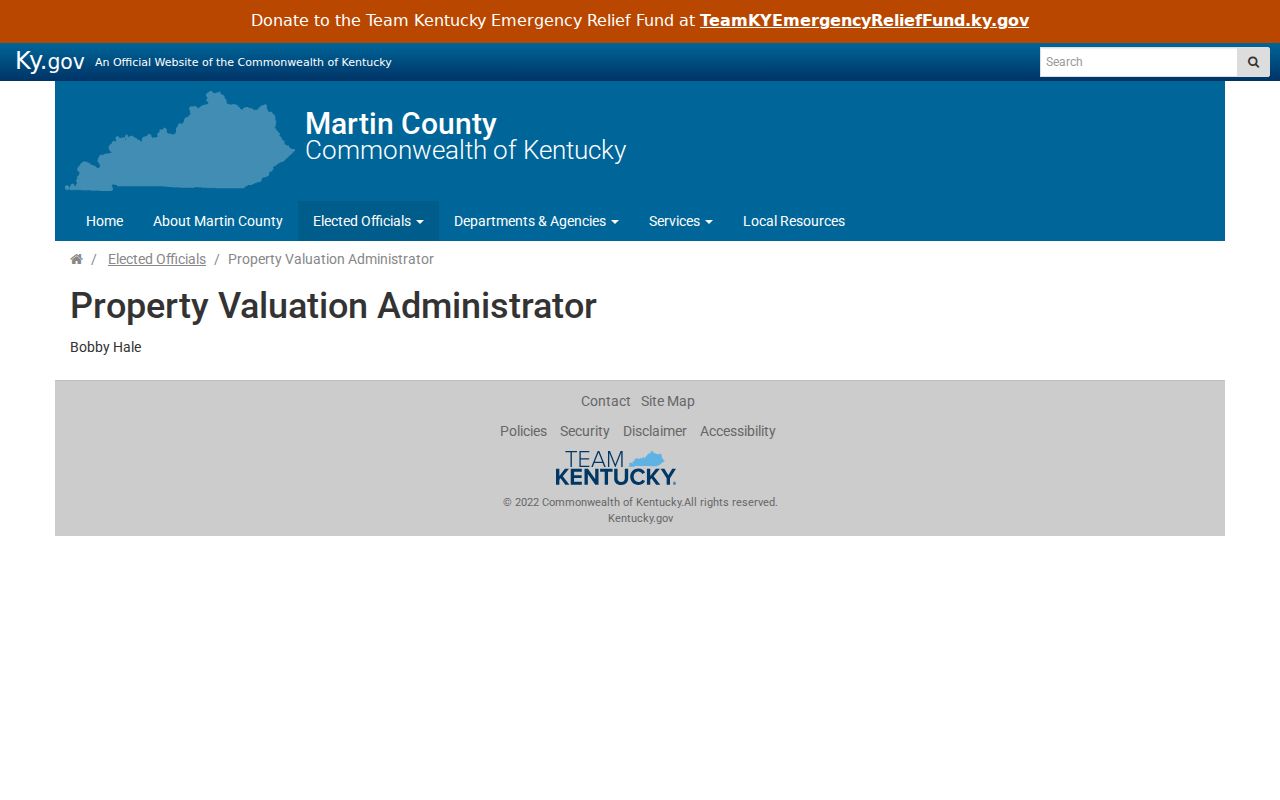
That page lists the local office only. It shows no live tax-card database. Ask staff for the map or account number, tax-year values, owner and mailing lines, exemption status, and a date for the response.
January 1 Martin County Assessment
Kentucky real property is assessed each January 1. The PVA adds new construction every year. It physically examines property at least once every four years. State guidance recognizes sales-comparison, cost, and income methods within the fair-cash-value framework. An inspection cycle does not cap reassessment at once every four years. Bill liability can hinge on January 1 ownership and private closing terms. Confirm the assessment name and the latest deed separately. A sale after the assessment date leaves the roll and deed out of sync. That mismatch can persist for a while. Martin County posts no stated update interval.
Martin County Homestead Records
Kentucky's homestead exemption is run by the local PVA. It serves owners who meet age or disability rules. The published maximum is $49,100 for the 2025 and 2026 assessment years. It lowers taxable assessed value only. It never changes market evidence, deed consideration, acreage, or ownership. The Kentucky DOR homestead page explains qualifications and the Form 62A350 route. That form captures applicant identity, property, ownership, an affidavit, and PVA approval, while other constitutional and statutory exemptions may use Form 62A023. Confirm eligibility and value with the Martin County PVA.
Note: An exemption changes taxable value for an approved year; it does not rewrite the property's deed or prove occupancy.
Trace a Martin County Tax Bill
Begin with the PVA parcel number. It beats a postal city or road label. Ask for the tax-year assessment and any exemptions. Then find out which office holds the bill. Kentucky DOR sends assessment questions to the PVA, payment questions to the sheriff, and delinquency questions to the clerk.
- Ask the PVA to match the address to its exact parcel or map number.
- Record land, improvement, total, exemption, and tax year from the assessment.
- Contact the sheriff for the normal collection stage or the clerk after delinquent transfer.
- Confirm balance, payment, third-party purchase, and sale status with the current custodian.
- Assessed value
- The PVA's fair-cash-value determination for tax administration.
- Taxable value
- The assessment after an applicable exemption or exclusion.
- Levy
- A tax rate applied by an authorized taxing body.
- Tax lien
- A claim tied to unpaid tax, distinct from the annual bill screen.
Delinquent Martin County Property Tax
After the normal collection period, delinquent bills move to the Martin County Clerk. Kentucky's system allows third-party purchasers. It also permits a scheduled tax sale. The clerk still controls the current balance and availability. The statewide delinquent bill list lets you search by county. No Martin County sale date should be assumed.
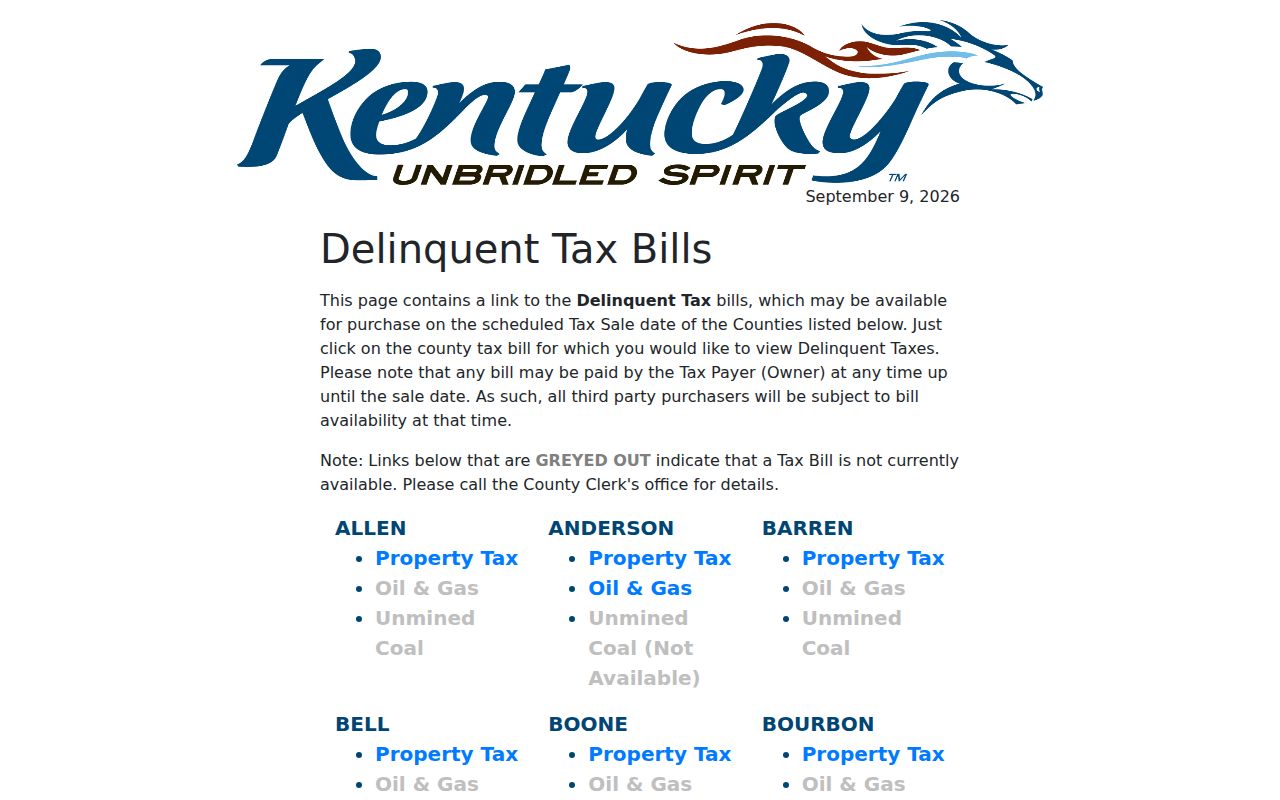
A list entry is a lead. It is not live proof of a bill's status. State guidance says an owner may pay until the sale date, so ask the clerk for the amount, payment method, purchaser status, and whether the bill remains available.
Martin County Value Evidence
Compare a disputed parcel with evidence from the same valuation period. Kentucky DOR recognizes three approaches. They are sales comparison, cost, and income. Useful records include arm's-length sales, photos, measurements, repair evidence, income data where it applies, and corrected property characteristics. A neighbor's lower bill may just reflect a different exemption or tax district. The statewide assessment process page explains fair cash value. Keep the PVA total separate from a deed's consideration. One serves the assessment roll, the other records what an instrument states, and neither is a private appraisal of current value.
Tax Liens in Martin County Records
Three records feed any lien question. A delinquent tax bill comes from one place. A recorded state or federal lien comes from another. A foreclosure case comes from a third. Search the county clerk's legal records under the exact party name. That search should surface a lien and any later release. If a dispute reaches court, CourtNet may show a case number. The Martin Circuit Court Clerk keeps the actual pleadings, orders, and judgment.
Never assume an old lien is gone. Locate the recorded release. Or get current confirmation from the custodian. A paid Martin County tax bill says nothing about other encumbrances on title. The deed and lien index answers that question. The tax record covers only assessment and collection status.
Challenge a Martin County Assessment
Kentucky gives taxpayers a clear appeal path. Start with the PVA conference during the May inspection period. Look over the roll, ask how the value was set, and bring concrete evidence. If the disagreement continues, the local board of assessment appeals comes next. State Form 62F031 records the property and the current and claimed fair cash values. It also covers your grounds, the conference confirmation, and contact and signature details.
The Kentucky property tax calendar shows the current sequence. Dates shift from year to year. Confirm them with the PVA and county clerk instead of trusting an old calendar. Save copies of the conference request and your evidence. Keep the appeal form, proof of delivery, and the final decision too.
Appeal window. Start with the Martin PVA during Kentucky's May inspection and conference period, then follow the current local board filing deadline.