
Identify Who Owns a Martin County Property
Martin County offers no public PVA parcel-card portal. The surest path to an owner of record starts with a phone call or a counter visit. The Martin County Property Valuation Administrator can connect an address or owner lead to a map or account number. That parcel number opens the deed records. The Martin County Clerk Legal Records Department then supplies the recorded transfer trail.
- Write down the situs address, road or route variant, city or ZIP, and any former owner name.
- Call the PVA at 606-298-2807 or visit 42 East Main Street in Inez. Ask for the assessment owner, exact map or account number, and property location.
- Search that owner as a grantee and grantor in CCLIX or eCCLIX, then locate the deed with the newest recording date for the same legal description.
- If the deed names a company, trust, estate, or fiduciary, follow that exact name through the appropriate entity or probate records.
This approach identifies who holds the recorded interest. It never pretends an address search alone proves title. Note the date of each response, because the PVA tax roll and the deed index can reflect different points in time.
Martin County Property Owner Sources Compared
Each source answers one part of the ownership question. The PVA record handles assessment. The clerk records instruments, and the map function matches a tract to a location, so no single source should be stretched beyond its stated role.
| Where ownership appears | What it contributes | How current or accessible |
|---|---|---|
| Martin County PVA assessment | Tax owner, property location, map or account number, values and exemption concepts | Call or counter route; no official public search was located |
| Martin County Clerk deed index | Grantor, grantee, instrument reference, recording date and legal description | CCLIX index reaches back to 1966; most online images begin January 2004 |
| Recorded plat or PVA map | Parcel orientation, lot or tract context, roads and adjoining land | Request from the PVA, DOR mapping service, or clerk |
| Kentucky Secretary of State | Entity filing details for a business name shown on a deed | Free Business Entity Search; not a title record |
An occupant, a tax-mail recipient, a deed grantee, a trustee, and a beneficial owner can all be different people or entities. Names rarely settle the question alone. The latest recorded deed confirms a recent transfer. For a legal opinion on the full bundle of interests, ask a title professional.
When Martin County Has No Public Owner Card Online
A missing web card changes the access channel. The assessment record still exists at the PVA office. Ask for the owner spelling, situs or property location, mailing address if disclosable, map or account number, land value, improvement value, total assessment, and any last transfer reference. Field labels can vary by county.
Keep any written request narrow. Name the road or route, the approximate location, any known owner, and the record fields you want. If the PVA cannot locate the tract by a modern address, supply adjoining owners or a deed book and page. A deed book and page often settles the match. That helps most in rural Martin County. A legal description there may rest on a branch, a creek, a road call, or a parent tract.
Note: Do not invent a parcel-number format or promise an address search Martin County has not published.
Road Names That Unlock a Martin County Owner Search
Official Inez service material pairs Route 40 with Tomahawk and Route 908 with Coldwater Road. One address can fail. Another form reaches the same area. Record the house number, directional, route number, local road name, ZIP, and any old locality wording before asking who owns a parcel.
| Address clue | Keep separate | Why it helps |
|---|---|---|
| Route 40 / Tomahawk | Both route and local name | A notice or deed may index one form |
| Route 908 / Coldwater Road | Route, road and locality | Supports a broader counter search |
| Inez 41224 or Warfield 41267 | Postal label and city-limit status | A ZIP does not prove incorporation |
| PO Box or care-of line | Mailing address and situs | Tax mail can go somewhere other than the land |
The legal description binds owner to land. Keep any lot, block, subdivision, acreage, watercourse, or prior book-page reference exactly as recorded.
Trace Martin County LLC, Trust, and Estate Owners
A Martin County property owner may appear as an entity rather than a person. Copy the deed grantee exactly, suffixes and all. Search that exact name in the state business system. Compare active and inactive records when names have changed. A state filing identifies an entity but never proves it owns a tract; the recorded deed does that.
Trusts need both names. Search the trust wording and the named trustee. Estates take more digging, so look for the decedent, the executor or administrator, an affidavit of descent, a fiduciary deed, the will, and the probate order. Martin County's recorded categories include wills and affidavits. CourtNet may offer a case lead, though a will can describe land without completing the transfer.
- Owner of record
- The person or entity associated with the official record being consulted.
- Grantee
- The party receiving the interest stated in a recorded deed.
- Situs
- The physical location of the property, distinct from the tax mailing address.
- Title
- The legal ownership interests and claims, which cannot be proved by one directory result.
Use Martin County's Latest Recording Date
Kentucky fixes January 1 as its assessment date. That year's tax responsibility can stay with the January 1 owner even after a later sale. The state describes continuous roll updates but gives no Martin-specific lag between deed recording and the PVA change. Treat a mismatch as a cue. Comparing dates beats guessing which name is false.
Start with the deed itself. Record its execution date, recording date, grantee, instrument number or book-page, and legal description. Ask the PVA when its roll was last updated. Splits and combinations add a wrinkle. Retain both the parent and the child identifiers when a parcel was split or combined. The present-owner details continue on the Martin County current owner page.
Note: The newest recorded deed is the stronger check for a just-completed transfer when the assessment roll still carries an earlier name.
Martin County Doc Alert After an Owner Search
The clerk's records page describes Doc Alert, a free signup tied to a person or business name. Each email flags a newly filed deed or mortgage. That makes it useful after a first owner search. Family names and entities show up often in the recorded chain of a Martin County property.
Doc Alert is a notice service, nothing more. It is not title insurance, a release search, or proof that an instrument touches the exact parcel. Open the cited filing. Compare the legal description and party role, and check for related assignments or releases, since a name-only notice can match another person or business.
What Martin County's PVA Page Confirms
The official Martin County PVA page names the county office responsible for assessments. The PVA publishes no public owner-search form online, so owner questions go through the office directly.
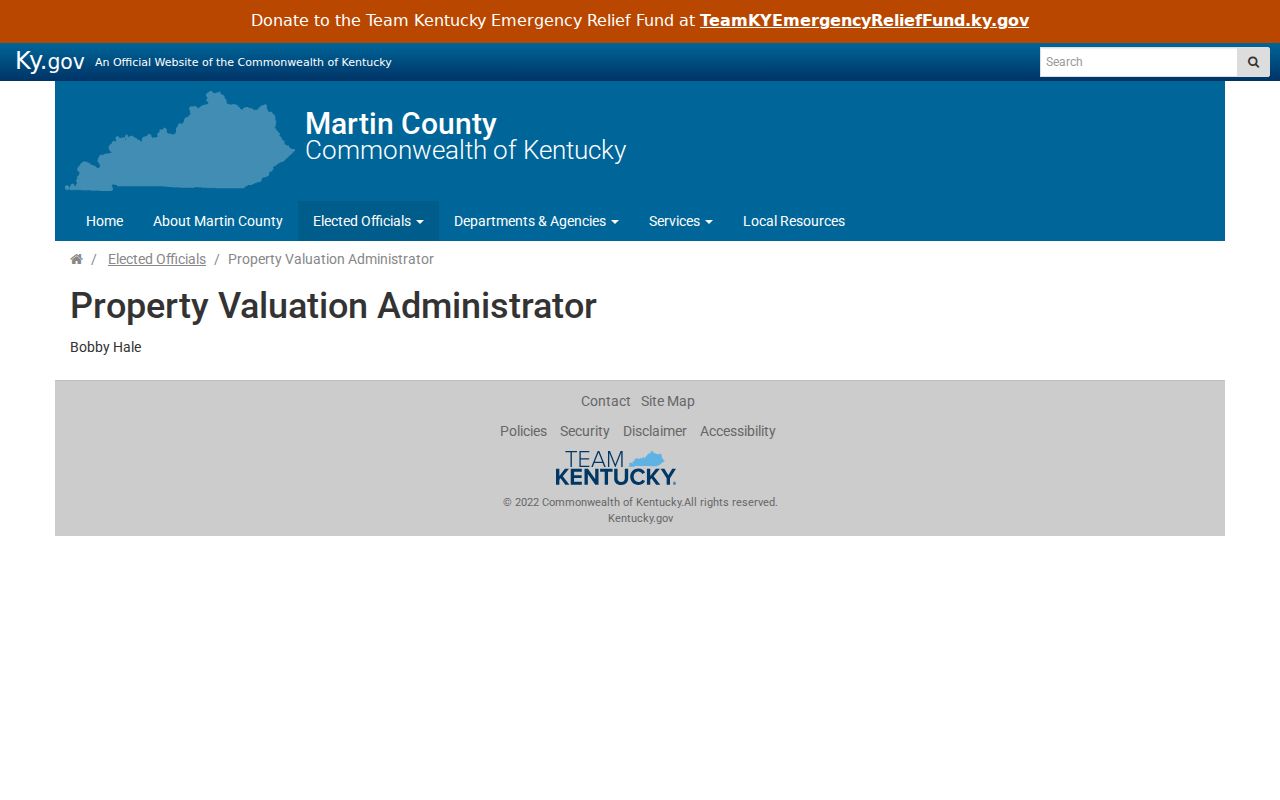
The PVA page points visitors toward a phone-and-counter route for confirming an owner of record. Martin County offers no anonymous address search, no public field listings, and no last-sale display on that page.
Keep a Dated Martin County Owner Workfile
Build a dated workfile for your Martin County ownership search. Each source should record the question it answered. For the PVA row, capture the owner spelling, situs address, any released mailing destination, map or account number, value components, and the date obtained. The deed row needs grantor, grantee, deed type, execution date, recording date, and the instrument or book-page reference. Copy the exact legal description too. A separate map row can hold roads, adjoining parcels, and any product disclaimer from the plat or GIS source. It keeps the plat or GIS details out of the deed notes.
When a court, probate, or business record enters the picture, link it by case number or entity identifier rather than a common name match. Note where the deed image itself was viewed: at the clerk counter, through paid eCCLIX access, or on microfilm. That single access note lets a buyer, heir, surveyor, or title professional reproduce the property search from scratch.
Records sometimes disagree. Do not overwrite the older result. Keep both entries with their dates. Then ask the custodian what event changed the name or parcel. A clean audit trail separates an ownership clue from a defensible research conclusion. It gives the Martin County property file real weight.
Limits on a Martin County Property Owner Lookup
An owner lookup in Martin County can confirm the tax owner and recorded grantee. It also shows the mailing route and deed reference. It cannot tell you who occupies a building. Nor can it resolve every unrecorded claim or stand in for a certified title examination. A GIS or PVA map serves identification rather than conveyance. A business filing never substitutes for the county deed in Martin County property records.
Use owner records with care. A Martin County owner name is a research lead, not a title opinion. Never use property data to stalk, harass, intimidate, or harm anyone.
Kentucky runs a Safe at Home program that can shield a real address in public records. It serves participants who qualify. When a parcel shows a protected or missing address, that is not an opening to work around someone's confidentiality. The right move is simple. Ask the records custodian what may lawfully be released, and respect any redaction the office applies.